
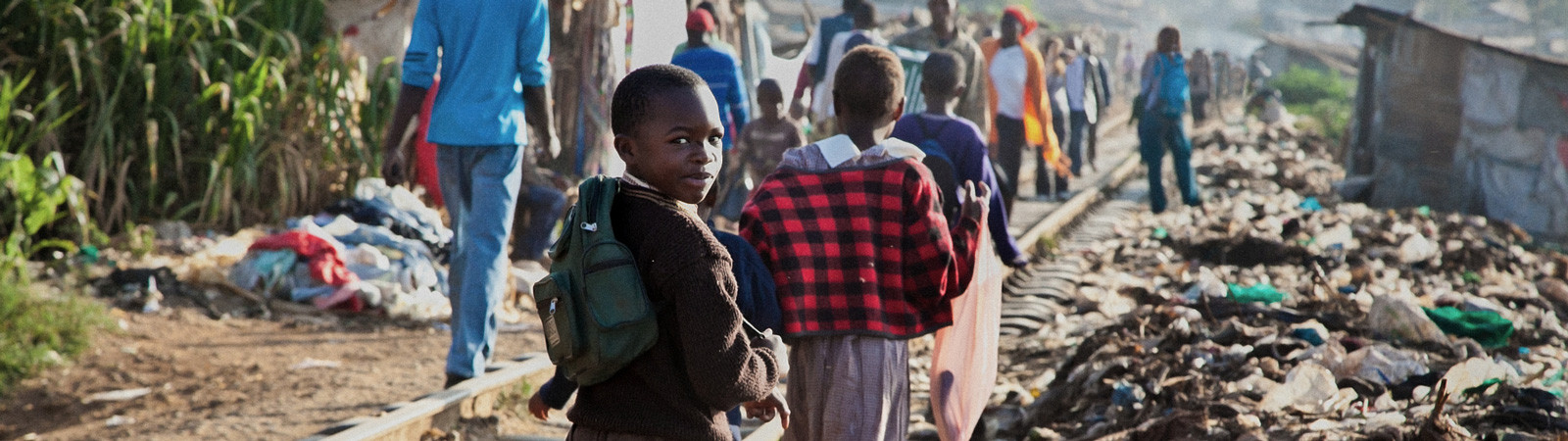


Looking back, 2024 was a year that made the communities we serve stronger and better equipped to navigate problems in the areas of health, education and income generation. All children enrolled in our pediatric HIV care program improved in health and all school age children are attending school. In addition, last September we launched a program for children that teaches them computer skills.
Proven Health Solutions. Powered by Community
Every year, more than 70 million people move to cities – most, into slums that lack clean water, safe housing, and reliable care. Here, women and children carry the heaviest burdens: HIV, maternal deaths, malaria, unsafe air from cooking stoves, and untreated mental health issues and trauma.
Our Approach
At Power of Love, we’ve learned that no issue in a slum stands alone. Hunger, HIV, unsafe water, depression, and poverty are all woven together. That’s why our model is different: we build a Circle of Care, so every visit by a community health worker touches multiple parts of a family’s life.
Our community health workers - women trained from within the neighborhoods we serve -bring trusted care directly to front doors. In a single week, they may check a child’s HIV treatment, distribute a mosquito net, assess a mother’s mental health, and show a grandmother how to use a clean cookstove.
In addition, we work closely with the local healthcare system to supplement, support and strengthen their output so that our work carries forward beyond us.
Why Integration Saves Money
Traditional aid programs treat each issue separately - one project for HIV, another for malaria, another for water. That means multiple staff, visits, and systems. Our Circle of Care combines these needs in a single visit, preventing duplication and reducing costs.
The result: health at lower cost per family, and less strain on fragile public health systems.
The result? Better health at lower cost per family, and less strain on fragile public health systems
Proof of Impact:
- Children in our care achieve 97% survival — > at or above the best published program results in sub-Saharan Africa, where average survival is ~94% at 1 year and ~93–94% at 2 years. Currently we are providing comprehensive care for over 500 children with HIV
- Comprehensive mental health treatment and support
- Over 50,000 treated mosquito nets distributed, reducing malaria incidence
- Nearly 1000 water filters installed, reducing diarrheal disease.
- Over 8000 clean burning stoves distributed cutting indoor smoke and lung infections.
- Over 2,000+ women trained and funded to start small businesses.
See how our Circle of Care works
Why Slums?
- Scale: More than 1.1 billion people already live in slums; by 2030, it will be nearly 2 billion.
- Stacked Risks: HIV, unsafe water, maternal deaths, indoor air pollution, and untreated mental illness are all interconnected.
- What Works: Community-led, integrated care addresses multiple challenges in a single household visit.


